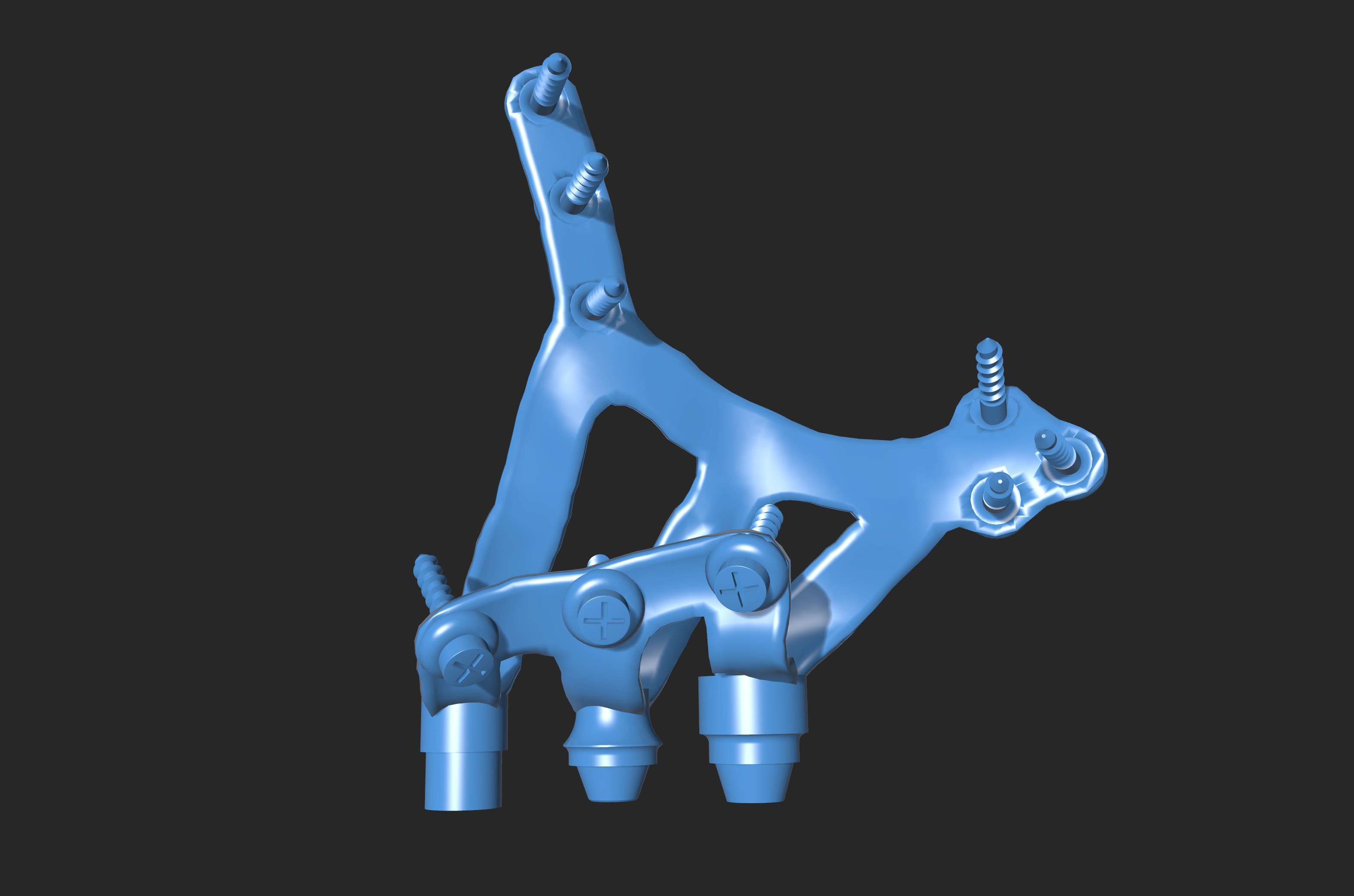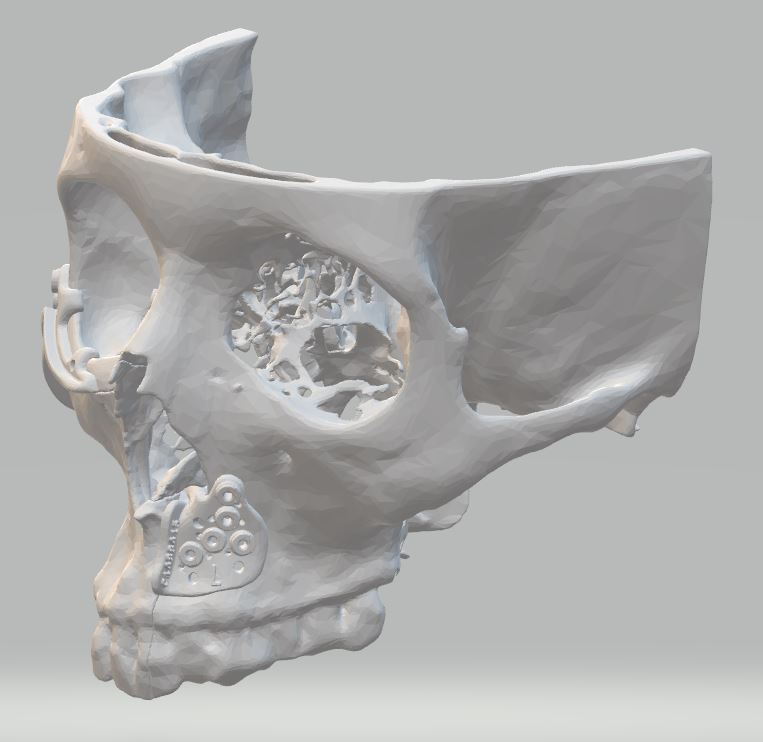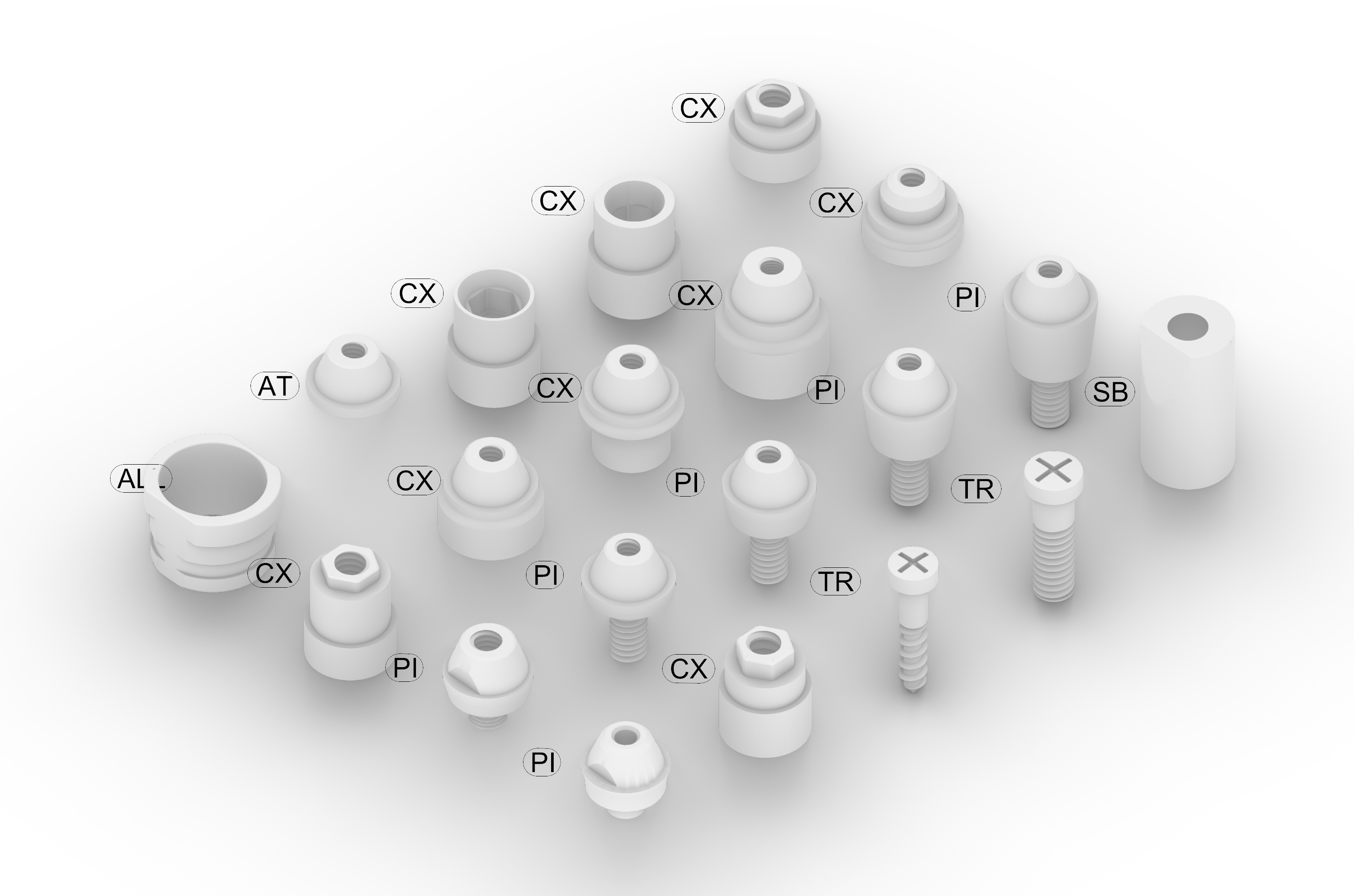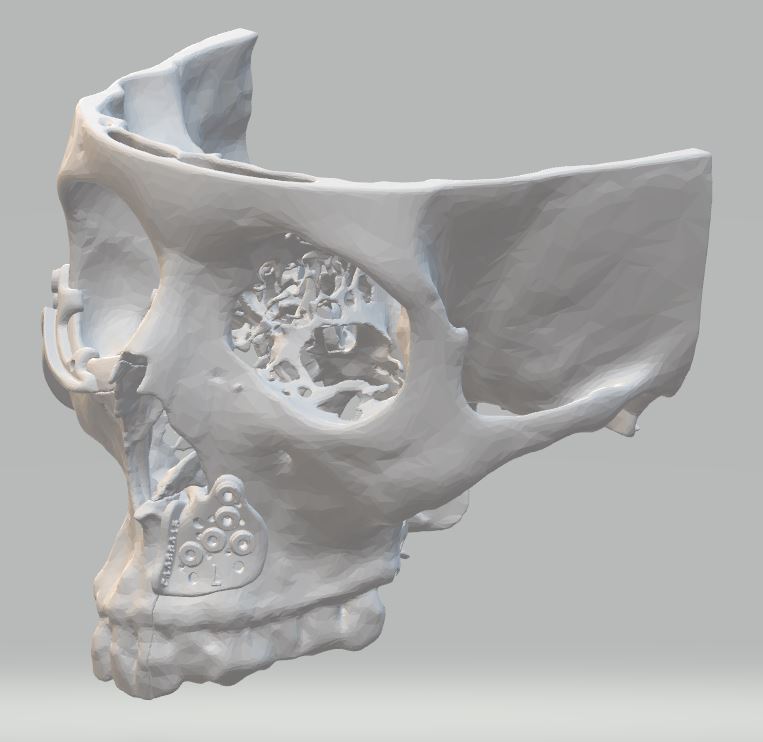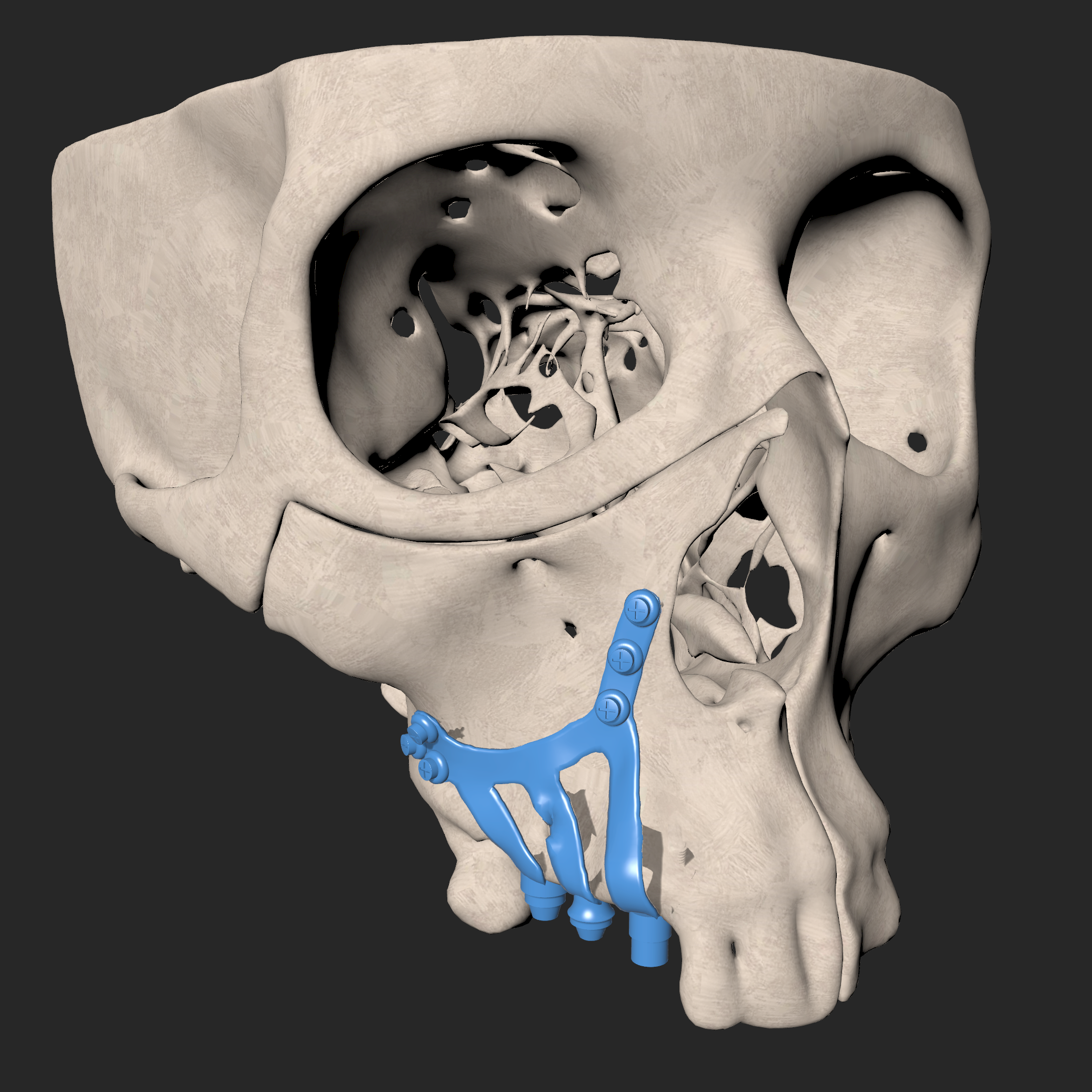
Computational system for generating patient-specific subperiosteal implants from CT data. The workflow integrates anatomical reconstruction, parametric modeling and automated generation of STL geometries ready for additive manufacturing.
This system was developed to automate the generation of patient-specific subperiosteal implants from CT-derived anatomical data. The workflow converts segmented bone geometry into a parametric implant model capable of adapting to complex anatomical surfaces.
By integrating medical image processing with computational design tools, the system transforms irregular anatomical meshes into controlled parametric structures suitable for engineering and fabrication. The resulting models remain fully editable while enabling automated STL generation for additive manufacturing.
Designing subperiosteal implants requires adapting engineered geometries to irregular bone surfaces reconstructed from medical imaging data.
Key technical challenges included:
• Processing dense anatomical meshes obtained from CT segmentation
• Maintaining geometric fidelity when fitting parametric structures to organic surfaces
• Embedding structural reinforcement logic into the implant geometry
• Producing consistent results across different patient anatomies
• Generating fabrication-ready geometries for additive manufacturing
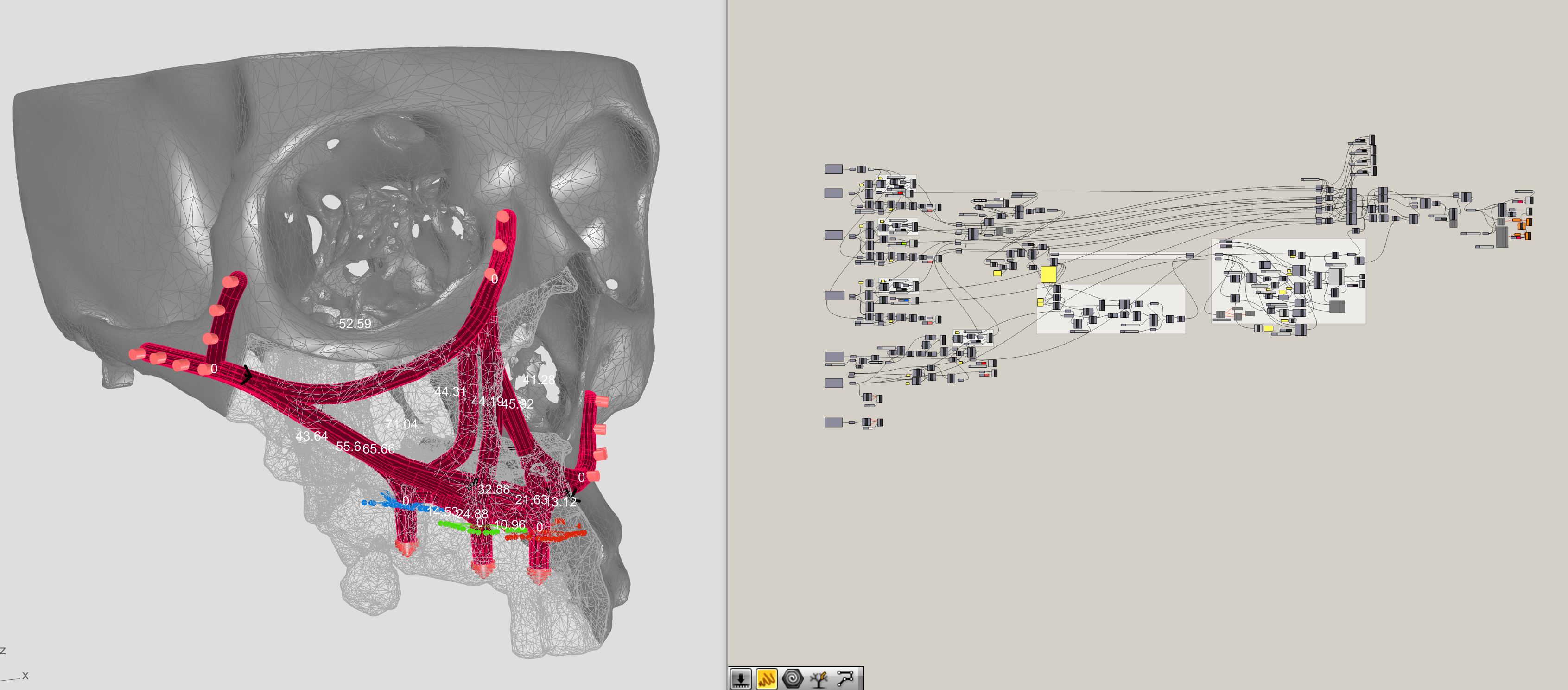
The project resulted in a computational workflow that connects medical image processing, parametric modeling and digital fabrication preparation.
The system integrates CT segmentation in 3D Slicer, parametric implant generation in Rhino and Grasshopper, and interactive visualization through a ShapeDiver web interface.
The workflow provides:
• Approximately 50% reduction in implant planning time
• A standardized process for generating patient-specific implant geometries
• Improved anatomical fitting through controlled parametric adaptation
• STL-ready geometries compatible with additive manufacturing
• Web-based visualization for evaluating implant configurations before fabrication