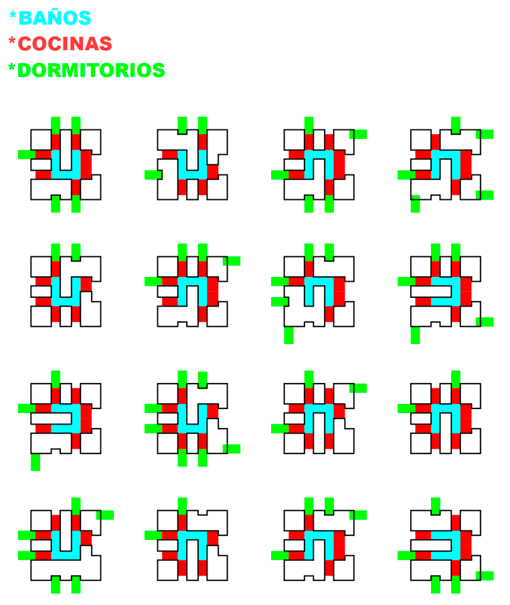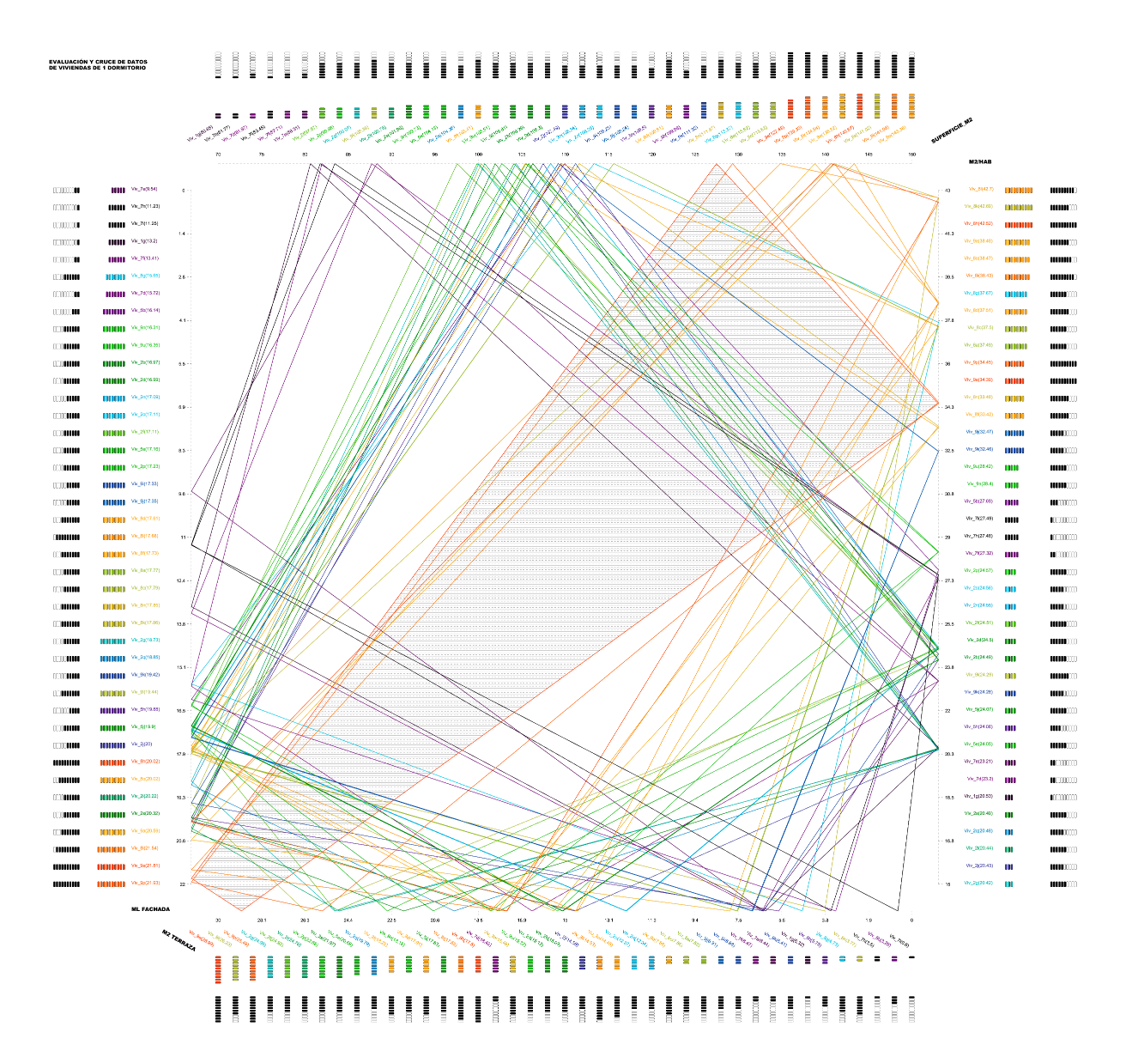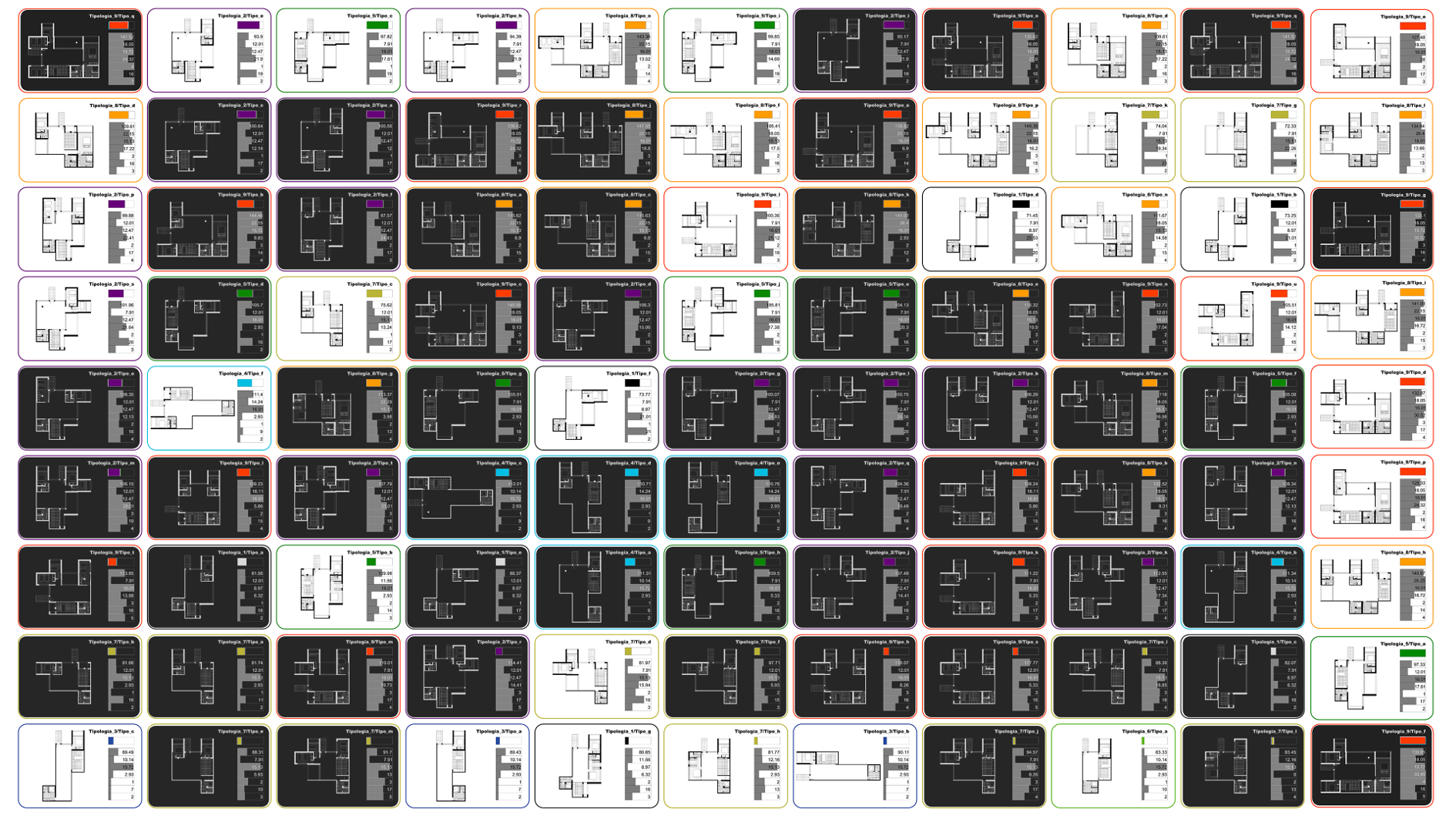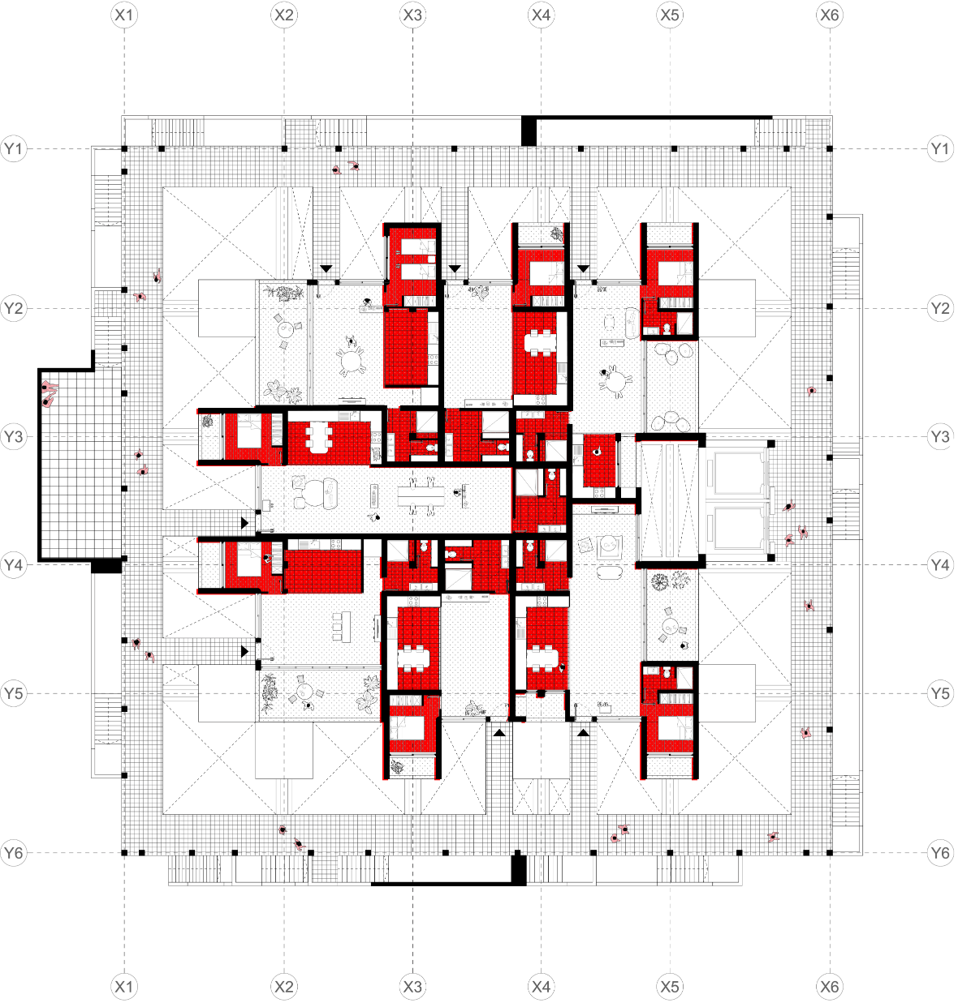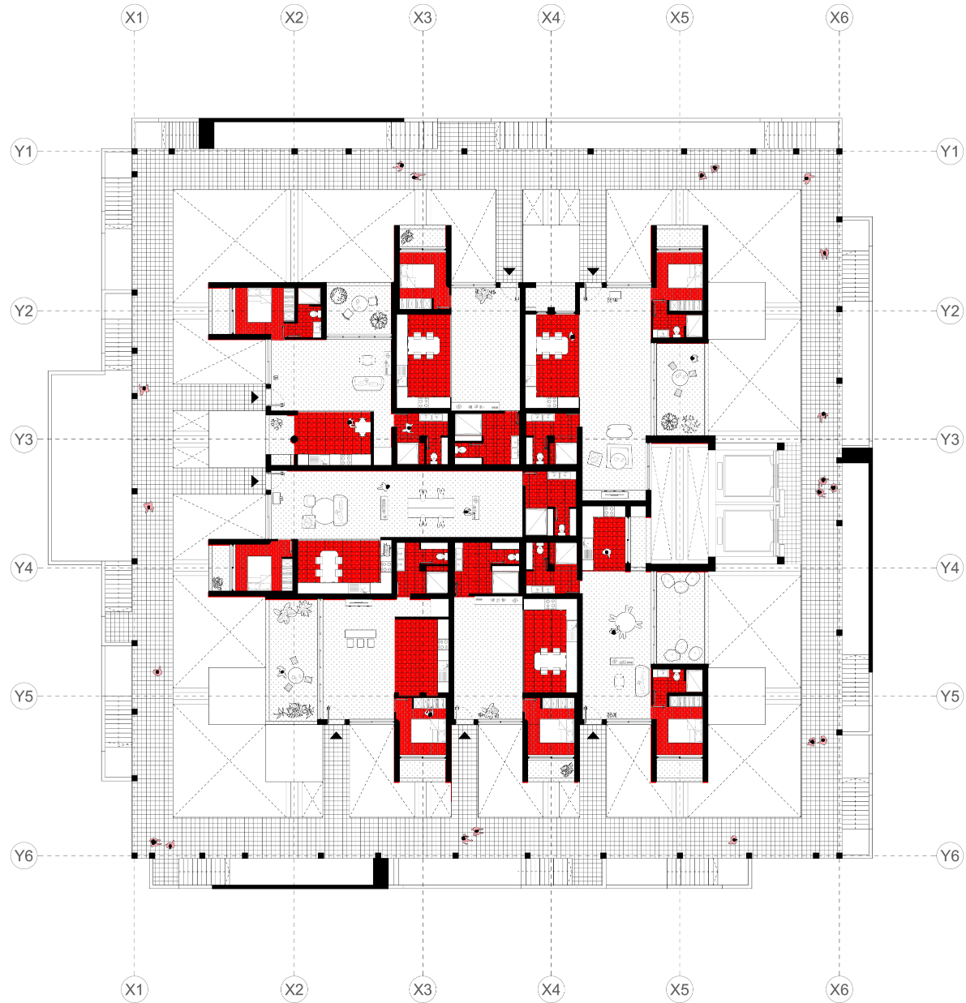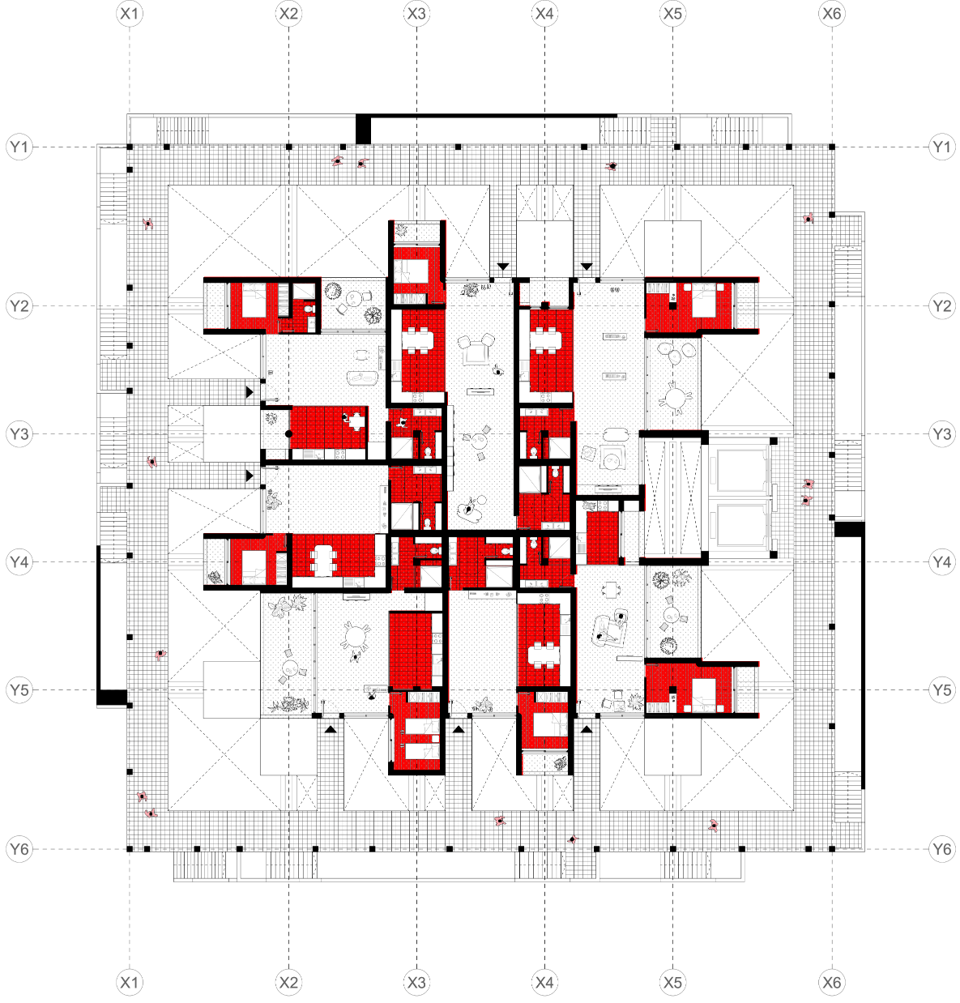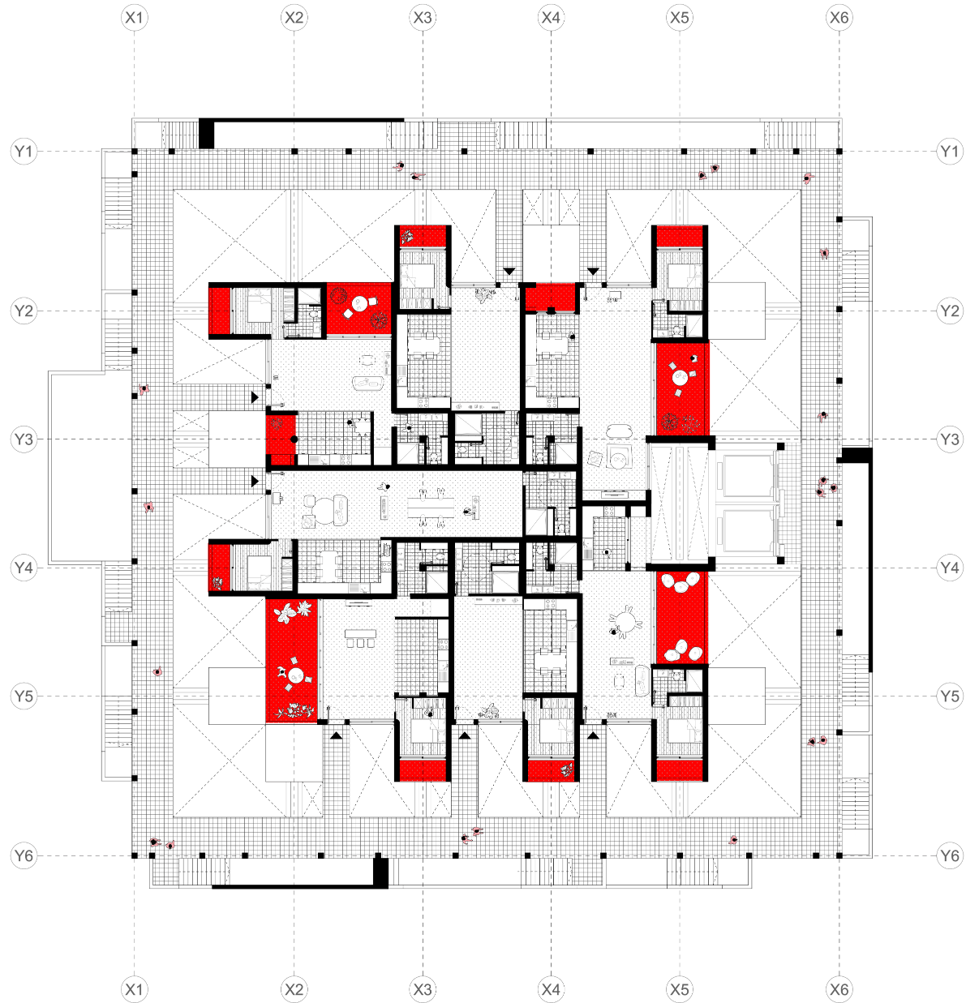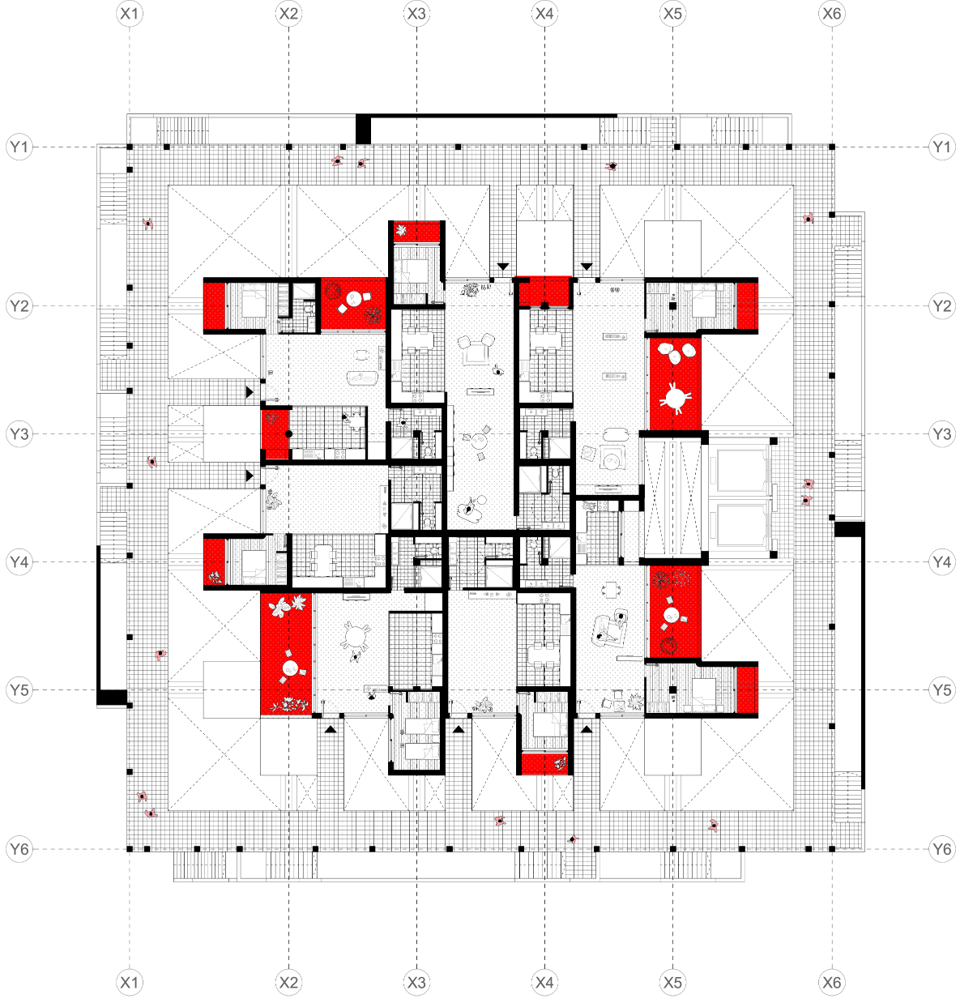
Rule-based computational system for generating and evaluating housing configurations through parametric modeling and spatial logic.
This system was developed to explore housing design through a rule-based generative framework. The workflow defines spatial relationships between essential residential functions and uses these rules to automatically generate different housing configurations.
By organizing elements such as kitchens, bathrooms and bedrooms through gradients of privacy and functional dependencies, the system produces a wide range of housing layouts derived from a shared parametric logic. The approach focuses on the generative process rather than a single final design solution.
Defining a generative housing system requires translating spatial relationships and architectural rules into computational logic.
Key technical challenges included:
• Establishing rule-based relationships between core residential functions
• Defining spatial gradients between public and private areas
• Maintaining coherent circulation within automatically generated layouts
• Allowing variation in orientation, surface area and façade relationships
• Evaluating multiple housing configurations within the same system

The project resulted in a computational workflow capable of generating and evaluating multiple housing configurations through parametric rules.
The system uses Rhino and Grasshopper to organize residential spaces according to predefined spatial logic while allowing variations in size, orientation and façade conditions.
The workflow provides:
• Rule-based generation of housing layouts
• Evaluation of multiple spatial configurations within a single framework
• Parametric control of spatial relationships between residential functions
• Flexible housing typologies derived from shared design rules
• Computational tools for exploring generative housing systems