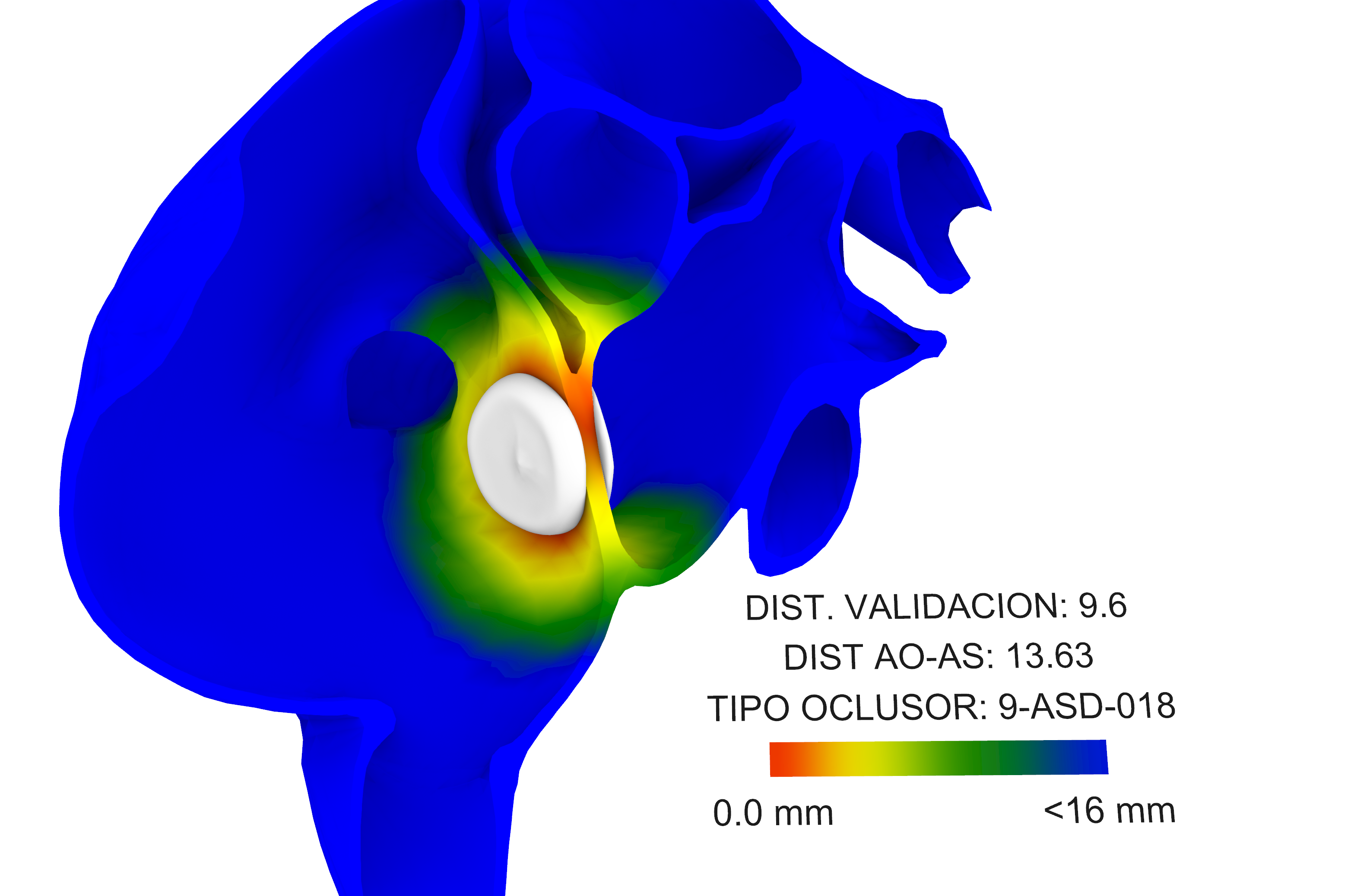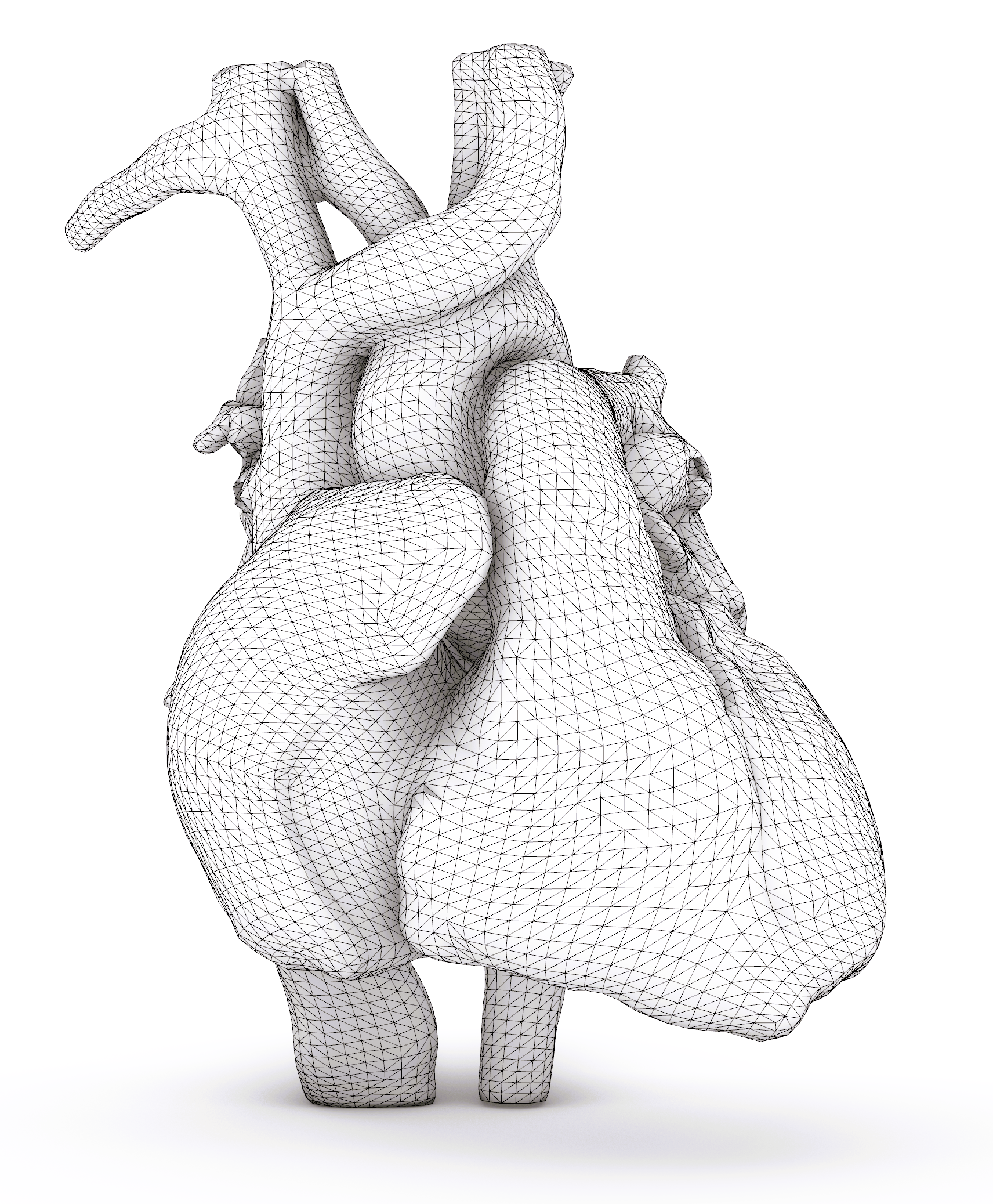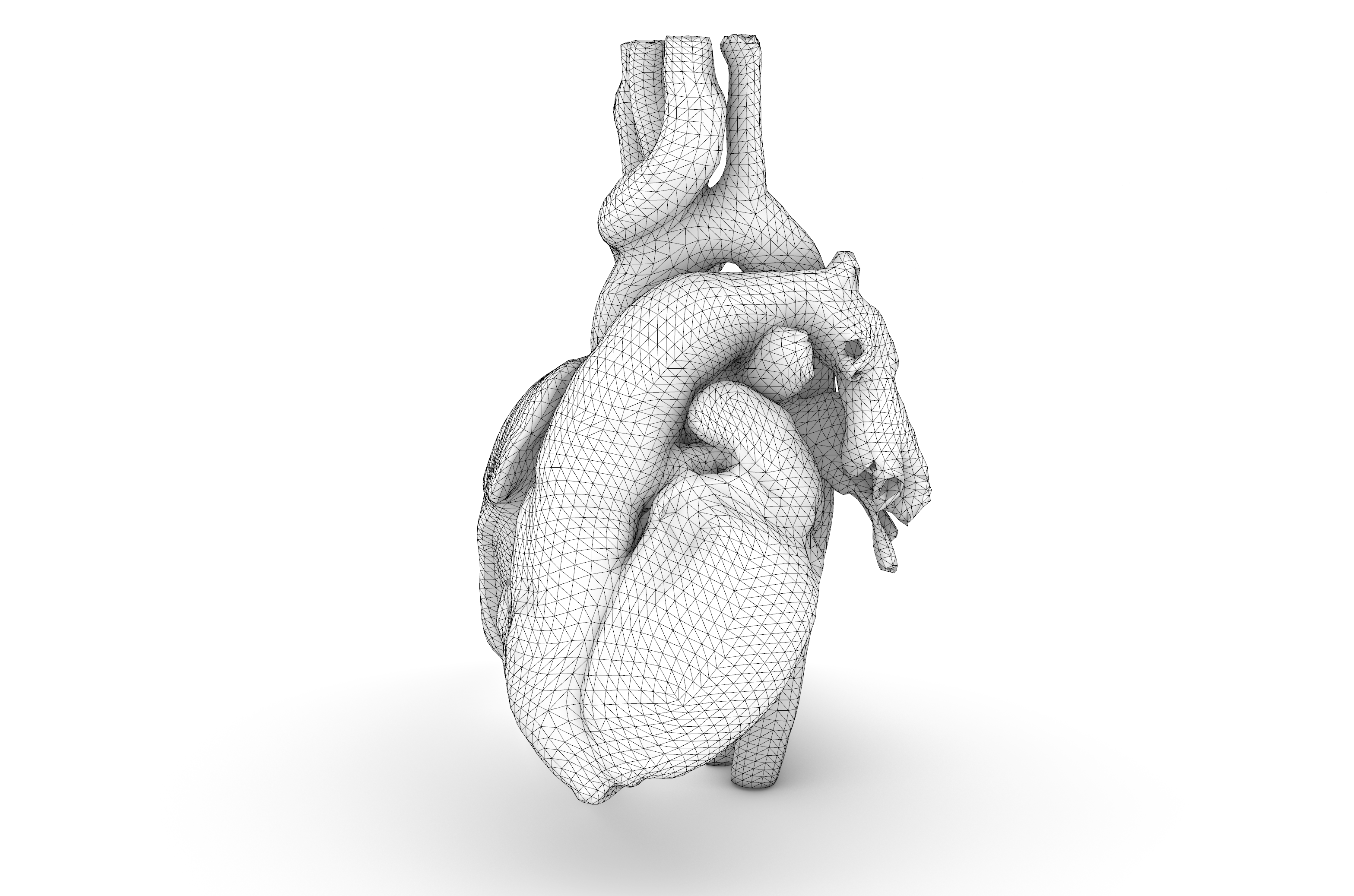
Computational system for planning cardiac occluder interventions using CT-derived anatomical models. The workflow generates patient-specific 3D models and simulation environments to support device sizing and preoperative evaluation.
This system was developed to support the planning of interatrial occluder interventions by generating patient-specific cardiac models from CT-derived anatomical data. The workflow converts medical imaging into computational geometries that allow clinicians and engineers to analyze cardiac morphology and evaluate device positioning.
By integrating parametric modeling with physics-based simulation, the system enables interactive exploration of occluder placement and anatomical constraints. The models allow evaluation of different device configurations and help determine the appropriate occluder size for each patient.
Planning interventions for interatrial communications requires precise interpretation of complex cardiac anatomy reconstructed from medical imaging.
Key technical challenges included:
• Translating CT-derived anatomical data into accurate computational models
• Representing complex cardiac morphology with sufficient geometric fidelity
• Simulating device interaction with surrounding anatomical structures
• Allowing controlled parameter adjustments for occluder sizing
• Providing a clear visualization environment for evaluating intervention scenarios
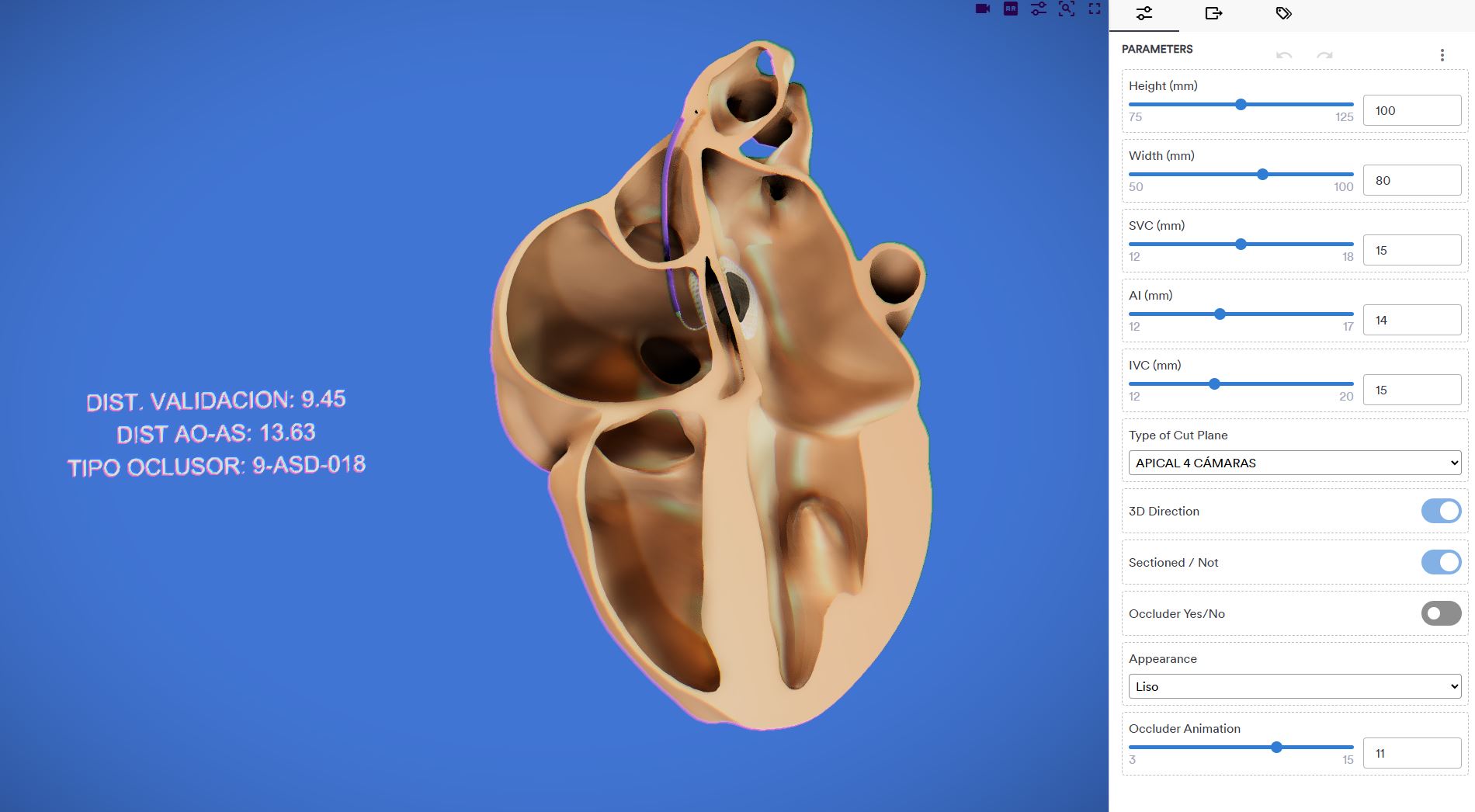
The project resulted in a computational workflow for generating patient-specific cardiac models that support occluder sizing and intervention planning.
The system generates cardiac geometries using Rhino and Grasshopper, performs physics-based interaction simulations with Kangaroo2, and provides interactive visualization through a ShapeDiver web interface.
The workflow provides:
• Generation of patient-specific cardiac models from CT imaging
• Simulation-based evaluation of occluder positioning
• Determination of appropriate occluder size for each patient
• Improved visualization of complex cardiac structures
• Interactive web-based exploration of intervention scenarios